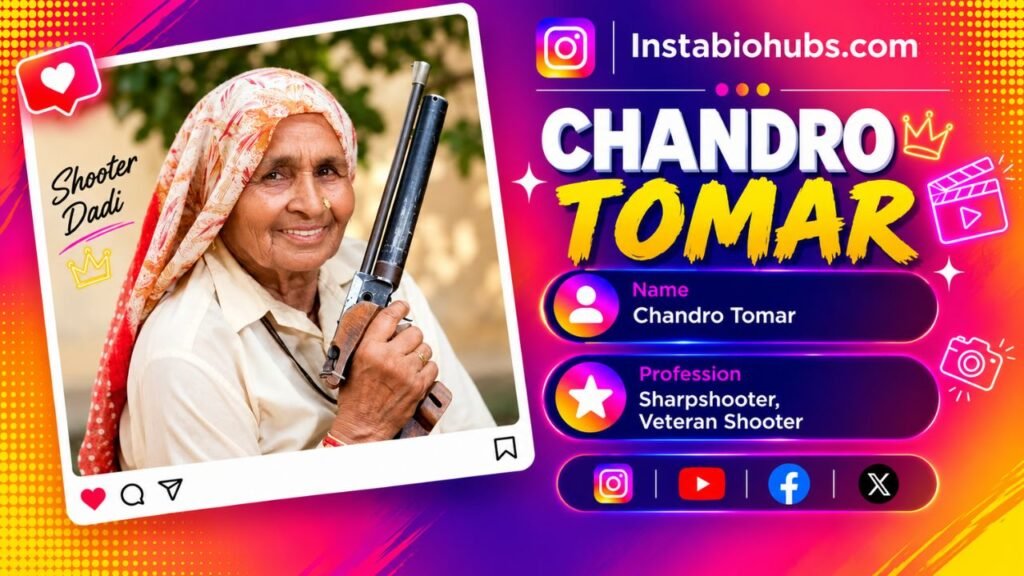
Chandro Tomar, popularly known as “Shooter Dadi” or “Revolver Dadi,” was an Indian sharpshooter who became widely known for beginning her competitive shooting career in her sixties. Her story attracted national and international attention because she entered a sport traditionally associated with younger competitors at an unusually late stage of life and went on to compete successfully in shooting championships. She also encouraged girls and young women to take up shooting and became one of the most recognisable figures associated with sports in rural Uttar Pradesh.
Tomar was born in 1932 and was associated with Johri village in Baghpat district, Uttar Pradesh. She did not attend school and married at a young age. Before becoming a shooter, much of her life was centred on household responsibilities and family. Her later transformation from a village homemaker into a nationally recognised shooter became the defining feature of her public story.
Chandro Tomar Early Life
Chandro Tomar grew up in a traditional rural environment and did not have the opportunity to pursue formal education. According to profiles of her life, she married when she was around 15 and spent decades managing family and household responsibilities.
Her early life was therefore very different from that of a professional athlete. She was involved in everyday agricultural and domestic activities, including caring for cattle, grinding wheat, cutting grass and other household work. In a 2021 profile, Tomar connected her physical activity throughout her life with the strength and agility she retained in old age.
Her entry into shooting was not the result of a childhood dream or a conventional sporting pathway. Instead, it happened almost accidentally.
How Chandro Tomar Started Shooting
The turning point came in 1999, when Tomar accompanied her granddaughter Shefali Tomar to the Johri Rifle Club. Shefali was interested in learning shooting but was hesitant to visit the club alone.
While accompanying her granddaughter, Chandro picked up a pistol and attempted a shot. According to Al Jazeera’s account, she hit the bull’s-eye with her first shot. Coach Farooq Pathan noticed her ability and encouraged her to train seriously.
That chance encounter eventually became the beginning of a competitive shooting career.
Tomar was already in her sixties when she began training. At first, she faced ridicule from people around her, and reports have described concerns within her family about her participation in competitions. She nevertheless continued practising.
Al Jazeera reported that she sometimes practised secretly, going out after other family members had gone to sleep. She also worked on her arm stability by holding a water-filled jug with her arm extended.
Chandro Tomar Shooting Career
Tomar’s competitive career developed rapidly after she started training at Johri Rifle Club. Hindustan Times reported that she won a medal at her first North Zone competition in 2000, after which her competitive success continued. Her sister-in-law Prakashi Tomar subsequently joined her, and the two became known collectively as the “Shooter Dadis.”
Tomar competed primarily in shooting events associated with the veteran category and accumulated numerous championship victories. Sources differ slightly on the precise number of championships, with accounts referring to more than 25 and others to more than 30. Wikipedia’s current biography records more than 25 state and larger championships, while Al Jazeera reported more than 30 championships in 10-metre pistol shooting.
One documented achievement was a gold medal at the Veteran Shooting Championship in Chennai. She also received recognition beyond individual competitions for her contribution as a senior sportsperson.
Her success was particularly notable because she entered competitive shooting at an age when most athletes have already retired from professional sport.
Chandro Tomar as “Shooter Dadi”
The nickname “Shooter Dadi” became closely associated with Chandro Tomar as her achievements received increasing media coverage. International outlets also used the name “Revolver Dadi” or “Revolver Granny.”
Her public image extended beyond shooting results. Tomar frequently encouraged young people to participate in the sport and became particularly influential among girls in western Uttar Pradesh.
According to Al Jazeera, she trained young boys and girls and helped members of her own family develop their shooting abilities. She also wanted shooting to become accessible to young people who otherwise might not have the opportunity to train.
The shooting environment around Johri subsequently became associated with the development of several shooters.
Chandro Tomar and Prakashi Tomar
Chandro Tomar’s story is closely connected with Prakashi Tomar, her sister-in-law. After Chandro began shooting, Prakashi also took up the sport, and the pair became famous as the “Shooter Dadis.”
The two competed in national-level events and became mentors for younger shooters. Hindustan Times reported that they regularly encouraged nervous competitors at shooting ranges and brought young people into the sport. Their influence was particularly noticeable among girls from Baghpat, Meerut and surrounding areas.
Their story later became the basis for a major Hindi film.
Chandro Tomar Family and Successors
Tomar’s influence extended into her own family. Her granddaughter Shefali Tomar became an international-level shooter and participated in competitions in countries including Hungary and Germany. Her niece Seema Tomar, meanwhile, achieved major recognition in competitive shooting.
Hindustan Times reported that Seema won an ISSF World Cup silver medal in the trap event. This helped establish the Tomar family’s association with competitive shooting beyond Chandro herself.
Tomar also encouraged other families in her region to allow their daughters to learn shooting. Al Jazeera reported that many of her female students eventually obtained employment in the Indian Army.
Awards and Recognition
Chandro Tomar received recognition for her contribution to sport and for her achievements as a veteran shooter. The Indian government’s Vayoshreshtha Samman records list Chandro Tomar among the recipients of a Sportsperson Award in 2012.
Her achievements also attracted attention from political leaders, sports personalities and Bollywood actors. By the late 2010s, she had become a familiar figure in Indian media and was regularly featured in stories about women, sport and ageing.
Her recognition was not limited to medals. She became associated with the idea that competitive sport could be pursued later in life and that women from rural communities could develop careers and public identities outside traditional domestic roles.
Saand Ki Aankh and Chandro Tomar
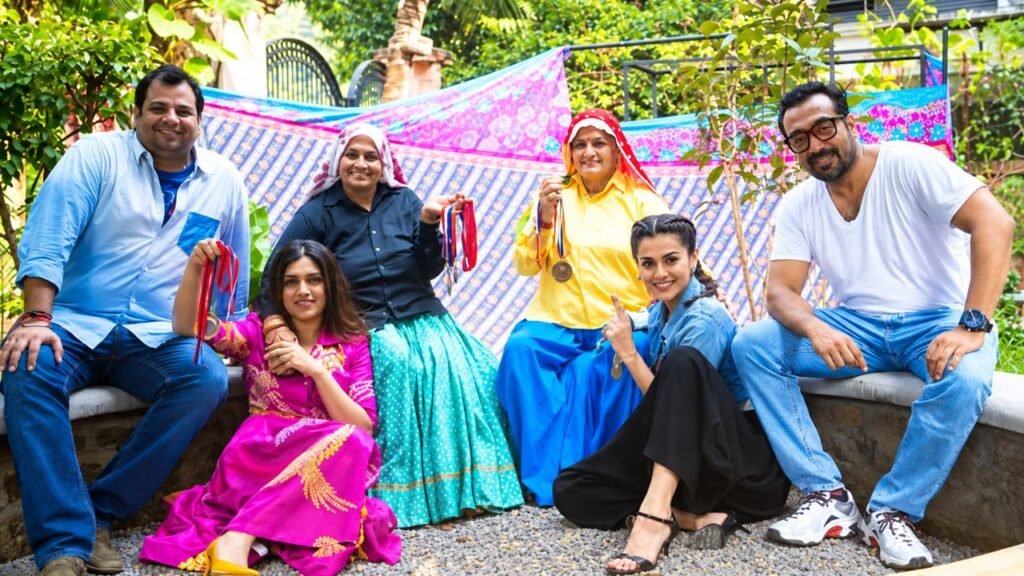
Chandro Tomar and Prakashi Tomar’s lives were adapted into the 2019 Hindi biographical film Saand Ki Aankh.
The film was directed by Tushar Hiranandani and starred Bhumi Pednekar as Chandro Tomar and Taapsee Pannu as Prakashi Tomar. It dramatised their transition from rural homemakers to competitive sharpshooters and their influence on younger women.
The movie brought Chandro and Prakashi’s story to a much wider audience. It also made the nickname “Shooter Dadi” familiar to viewers who may not previously have followed competitive shooting.
Chandro Tomar Death
Chandro Tomar died on 30 April 2021, aged 89, after contracting COVID-19. She had been admitted to a hospital in Meerut after experiencing breathing difficulties and died after several days of treatment.
Her death prompted tributes from members of the shooting community, athletes and film personalities. Prakashi Tomar publicly mourned her sister-in-law, while Seema Tomar described Chandro as an inspiration for girls who had taken up shooting.
Chandro Tomar Legacy
Chandro Tomar’s significance extends beyond the number of medals she won. Her sporting career began when she was already in her sixties, making the timing of her entry into competitive shooting an important part of her story.
She also helped create a pathway for younger shooters in her community. Through training, encouragement and her own example, she contributed to greater visibility for women in shooting in western Uttar Pradesh. Her granddaughter Shefali and niece Seema continued that sporting connection, while Prakashi became another prominent member of the family shooting story.
The Uttar Pradesh government later named the Noida Shooting Range and a road in her home village after her, according to her biographical record.
Today, Chandro Tomar is remembered primarily as “Shooter Dadi”, the woman who discovered competitive shooting late in life and turned an unexpected talent into a national sporting story. Her journey from a rural household to shooting championships, media recognition and a Bollywood biopic made her one of India’s best-known veteran sport personalities.
Read More: Mahhi Vij Age | Rysa Panday | Gauri Spratt | Sridevi Apalla | Shivangi Joshi
More FAQs About Chandro Tomar
Chandro Tomar was from Johri village in Baghpat district, Uttar Pradesh, where she became associated with the Johri Rifle Club.
Prakashi Tomar was Chandro Tomar’s sister-in-law. She also became a competitive shooter after being inspired by Chandro, and the two were popularly known as the “Shooter Dadis.”
Chandro Tomar was famous for becoming a competitive shooter in her sixties, winning numerous shooting competitions and encouraging girls and young women to pursue the sport.
The 2019 Hindi film Saand Ki Aankh is based on the lives of Chandro Tomar and Prakashi Tomar. Bhumi Pednekar portrayed Chandro, while Taapsee Pannu played Prakashi.
Tomar encouraged young people, particularly girls from rural communities, to learn shooting. She also supported members of her family who pursued competitive shooting, helping establish a wider shooting tradition around her community.

Priya Verma is an content writer and biography researcher with a strong interest in celebrity, sports, entertainment, and public-figure stories. She enjoys researching the early lives, careers, achievements, personal journeys, and important milestones of well-known personalities. Priya focuses on using reliable sources and presenting biographical information in a clear, accurate, and easy-to-understand format. Her goal is to help readers discover interesting facts and get a well-rounded view of the personalities they want to know more about.